A workshop that sells one table, not furniture
Grao is a solid-wood furniture workshop in Satu Mare, Romania. Nothing is mass-produced: every table in the Eclipse collection is hand-sculpted from Carpathian oak and designed to be the piece a home gathers around. Prices start in the thousands — which puts us squarely in territory where nobody clicks on impulse and everybody thinks it over for weeks.
These buyers are not looking for “a cheap table”. They are looking for one specific table: a shape that suits the room, a length that fits exactly between the walls, a finish that works with the floor they already have. And once a product is customisable across four dimensions at once, the classic catalogue — photo, price, add to cart — simply stops working.
The problem: nobody buys what they cannot see
The real challenge with a made-to-order product is that the customer’s table does not exist yet. It cannot be photographed, it cannot be put in a catalogue, it cannot be shown in a shop. The visitor has to build it in their head — and if the site does not help them do that, they leave for a retailer with stock and three-day delivery.
The second obstacle is price. On a configurable product, “price on request” kills conversion: people want to know now whether they can afford it, not in two days when someone answers an email. By then the enthusiasm is gone.
The customer’s table does not exist yet. The site had to show it to them anyway — and price it on the spot.
The configurator: four decisions and a price that moves
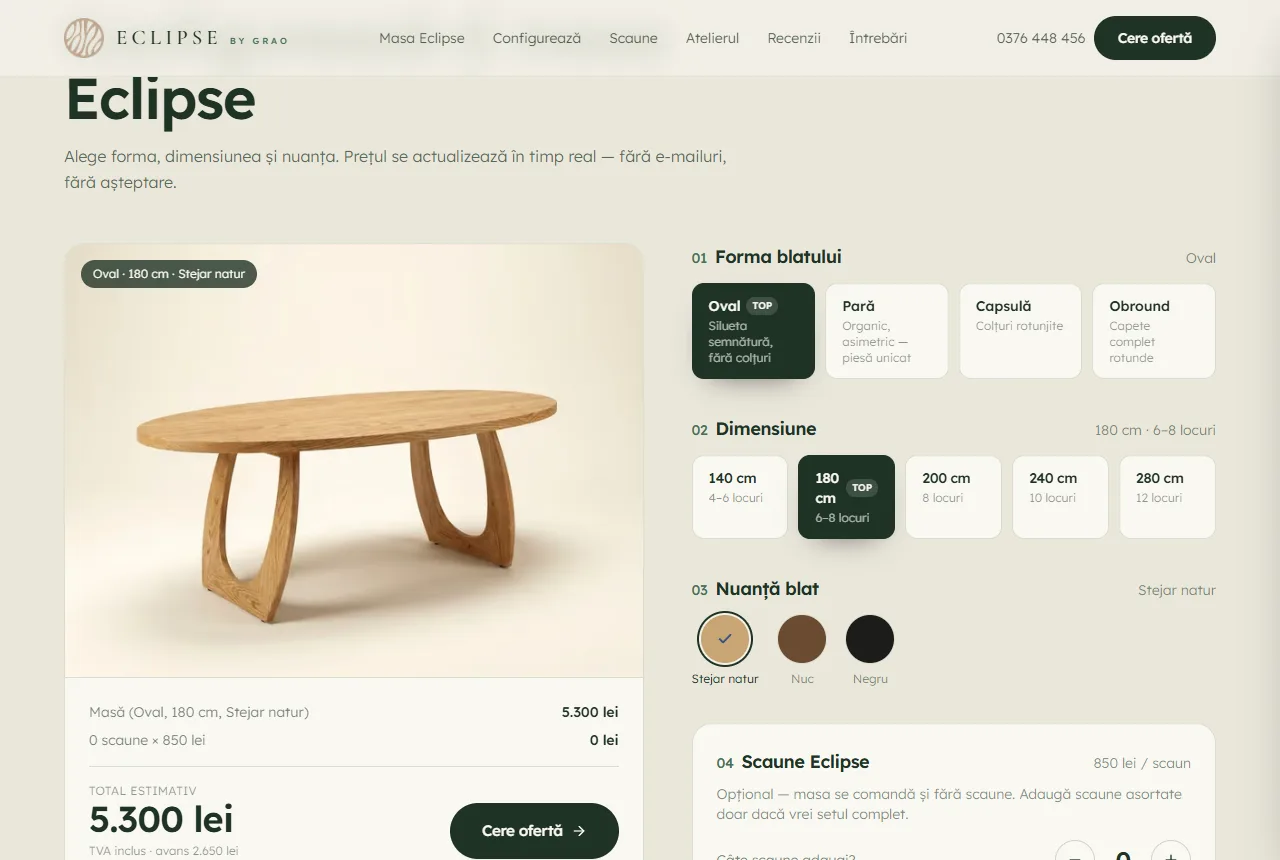
We built the store around an interactive configurator. The customer picks the tabletop shape (oval, pear, capsule or obround), the size between 140 and 280 centimetres — with the number of seats shown next to each option — the wood finish (natural oak, walnut or black) and the number of matching chairs.
On every selection the total recalculates instantly, VAT included, with the deposit shown separately. It is not a form that submits a request and waits — it is a shop window that answers. The promise is written right under the headline: the price updates in real time, no emails, no waiting.
The order of the questions is deliberate. It starts with shape — the emotional decision, the one that makes you picture the table in your dining room — and only then moves to size and finish, which are the practical ones. First you make them want it, then you help them measure it.
Product photography for a product not yet made
This was the unusual part. A configurator with four variables means dozens of possible combinations, and no workshop can afford a photo shoot for each of them.
We used AI-generated product photography so that every shape-and-finish combination is rendered realistically. The customer does not see a technical sketch or a cold render: they see their table, in the finish they just chose.
What convinces once the price appears
A number on screen is not enough at this price. The rest of the page builds trust piece by piece: the materials section explains where the oak comes from and how it is finished, the matching chairs get their own space with upholstery options, and the workshop process is broken down step by step so the buyer knows exactly what happens after they press the button.
Below those sit verified Google reviews, linked straight to the real profile — not testimonials we wrote — and a questions section that answers the fears that remain: how long it takes, how payment works, what happens if the table does not fit.
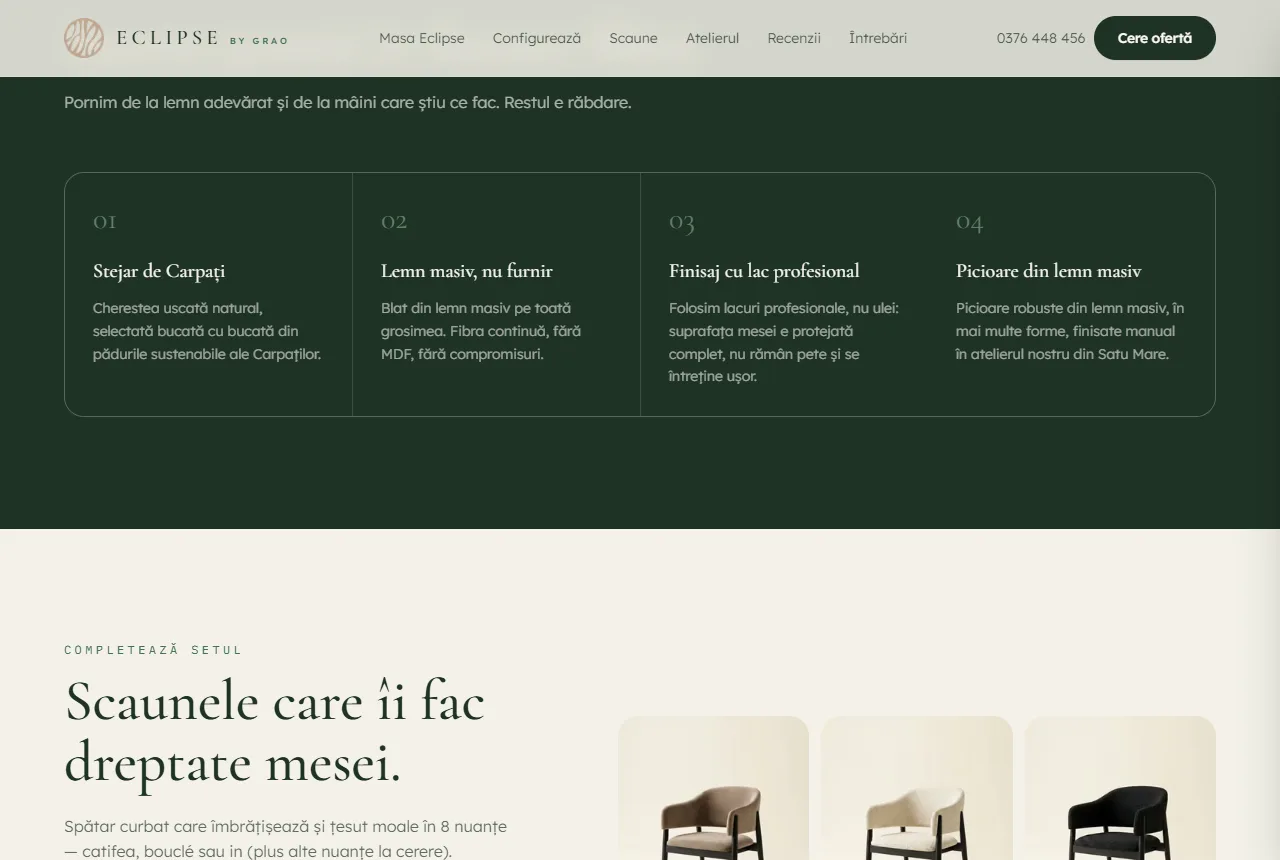
Every section below the configurator answers one question: “why would I trust a workshop I have never seen with this much money?”
How it works now
The result is a store that behaves like a sales consultant: it asks, shows, calculates and reassures. A visitor arrives without knowing exactly what they want and leaves with a concrete configuration and a price — or with a quote request in which they have already said everything that matters, which dramatically shortens the conversation that follows.