Restaurants lose money in places they cannot see
Stocko is an inventory management platform for restaurants. The problem it attacks is one every owner recognises but few measure: stock that expires, inconsistent portions, orders placed from memory, and food cost calculated roughly at month end, when it is far too late to correct anything.
The users are not technical people. They are head chefs and managers working from paper and spreadsheets, with no time to learn a complicated system in the middle of service.
What the product had to do
Inventory software for hospitality is not judged by its feature count but by how quickly data gets into it. If logging a delivery takes five minutes, the system is abandoned within two weeks.
So the priority was the daily flow: goods receipt, consumption, stock count — fast, from a phone, in the kitchen, not from a desktop in an office. Everything else, however useful, comes after.
An inventory system does not die from missing features. It dies because entering the data takes too long.
The features that actually change the month
The physical stock count compares the real count against system stock, highlights differences automatically, allows one-click adjustments and keeps the full history — exactly what you need to find out where the goods are going.
Advanced reports cover 7, 30 and 90-day periods, with waste broken down by cause, spend by supplier and full stock, exportable as CSV for accounting.
And the food-waste module records and monitors losses by cause, ingredient and period — operationally useful, and aligned with European rules in the area.
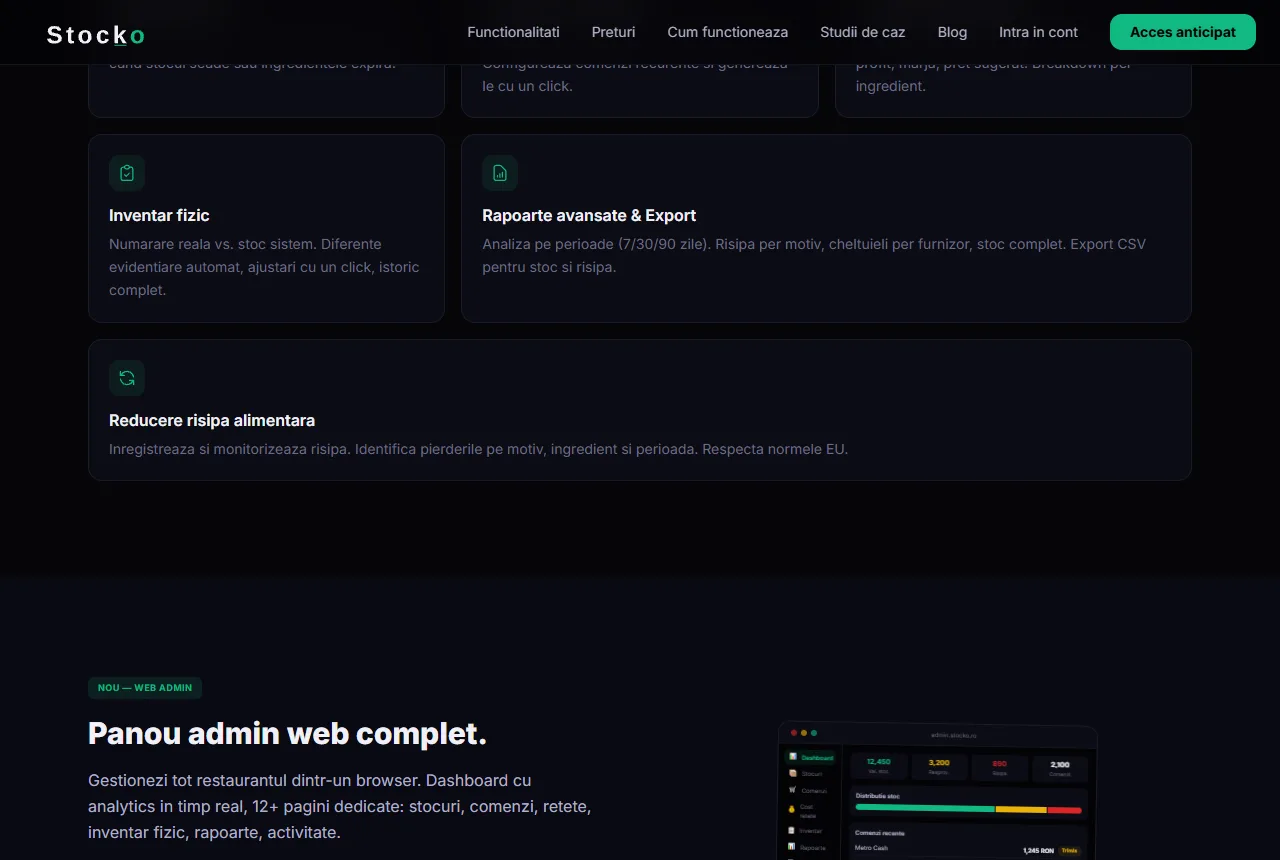
The admin panel: the whole restaurant in a browser
Above the day-to-day app sits a complete web admin panel: a dashboard with real-time analytics and more than twelve dedicated pages — stock, orders, recipes, physical counts, reports, activity.
Recipes are the piece that ties it together: once you know what goes into each dish, consumption is deducted automatically and food cost, margin and suggested price are calculated per ingredient rather than estimated.
Add automatic alerts when stock runs low or ingredients approach expiry, recurring supplier orders generated in one click, and eFactura import so data is never typed twice.
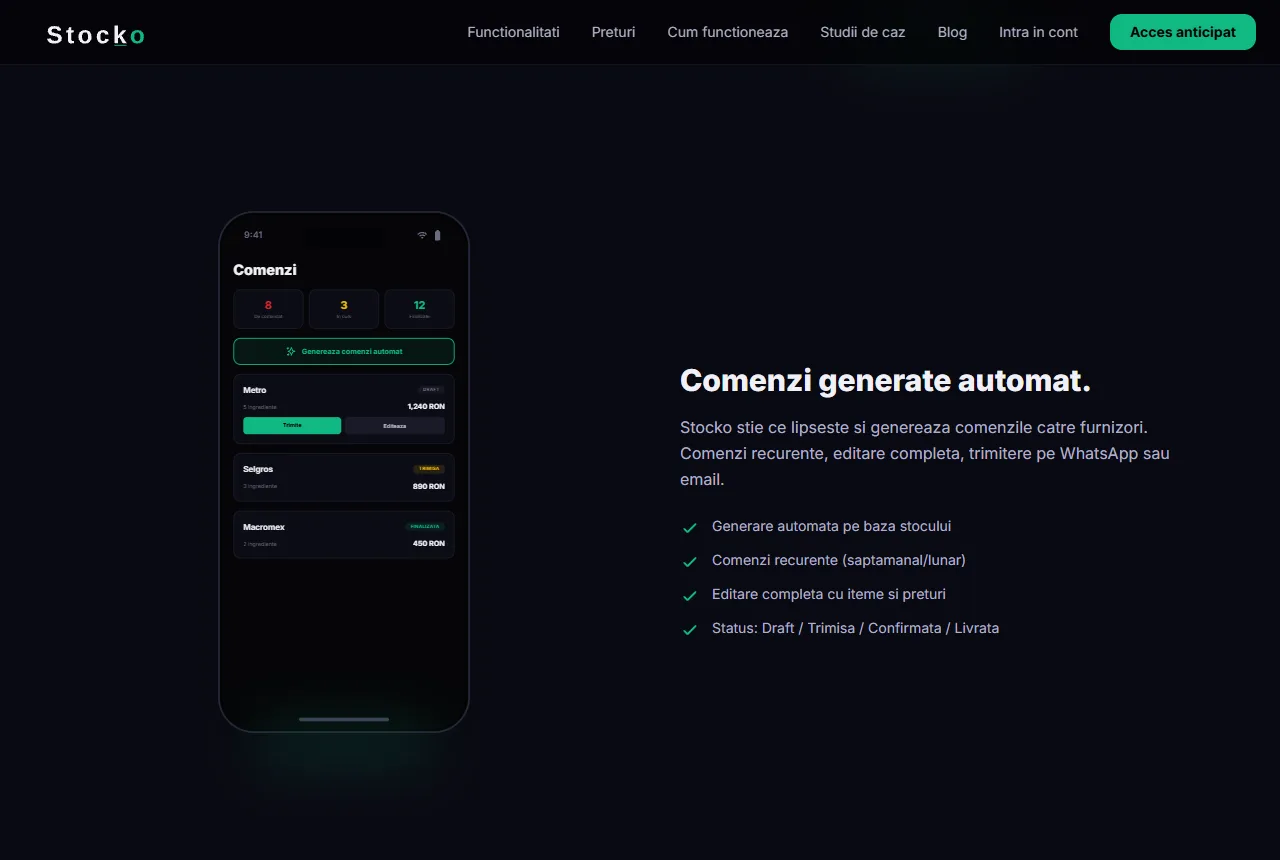
How it works now
The product has its own marketing site covering features, pricing, how it works, case studies and a blog, plus account access and early-access signup. The design is dark, information-dense and aimed at operators rather than casual visitors.