

In short
- Cortego started on 2 November 2026 as the mortuary register at Kirilă Funerar and, within two weeks, became software any funeral home can use.
- The details of a case are typed once; the papers for the public health authority, the contract signed on a tablet, the obituary and the memorial all come out of them.
- Each funeral home sees only its own data, encrypted with its own key and hosted in the EU. Kirilă Funerar uses it daily; since 15 November 2026 Beligi Funerare, in Bucharest, uses it too.
Where we started: the mortuary at Kirilă Funerar
Lucian has run Kirilă Funerar’s Google Ads account since 2019. In June 2026 we built their first internal app: the collection sheet is filled in on a phone, on the spot, and the handover record comes out by itself as a PDF.
Read more
On 2 November 2026 we moved on to the mortuary. We built the mortuary register by series (hospital, home, repatriation), with a file for each case, the care given, labels with a QR code and the registers an inspection asks for: cleaning, biocides, the refrigerator check.
On 4 November we started Cortego from that register, so that any funeral home could use it. We kept building it together with Sebastian Kirilă and his people, who use it every day.
What made it hard: the same details on many papers, one team in four places
- In a single case, the name and personal ID number of the deceased end up on many papers: the requests to the county public health authority (DSP), the contract, the obituary. One wrong digit on the first sheet travels to all of them.
- The team works in different places: the driver on the road, the colleague in the mortuary, the agent in the shop, the office. Each of them should see only what they need.
Read more
- The data is among the most sensitive there is: the deceased, their next of kin, ID numbers, phone numbers. It can’t sit just anywhere, and not everyone may read it.
- A DSP inspection asks for registers kept day by day, and the family wants to know exactly what it is paying for.
One case, from arrival at the mortuary to the memorial
Everything starts from the case file. The entry number is assigned automatically, by series. From a photo of the ID card or of the death certificate the app reads the details and puts them in the fields, and a person checks them before they reach any paper.
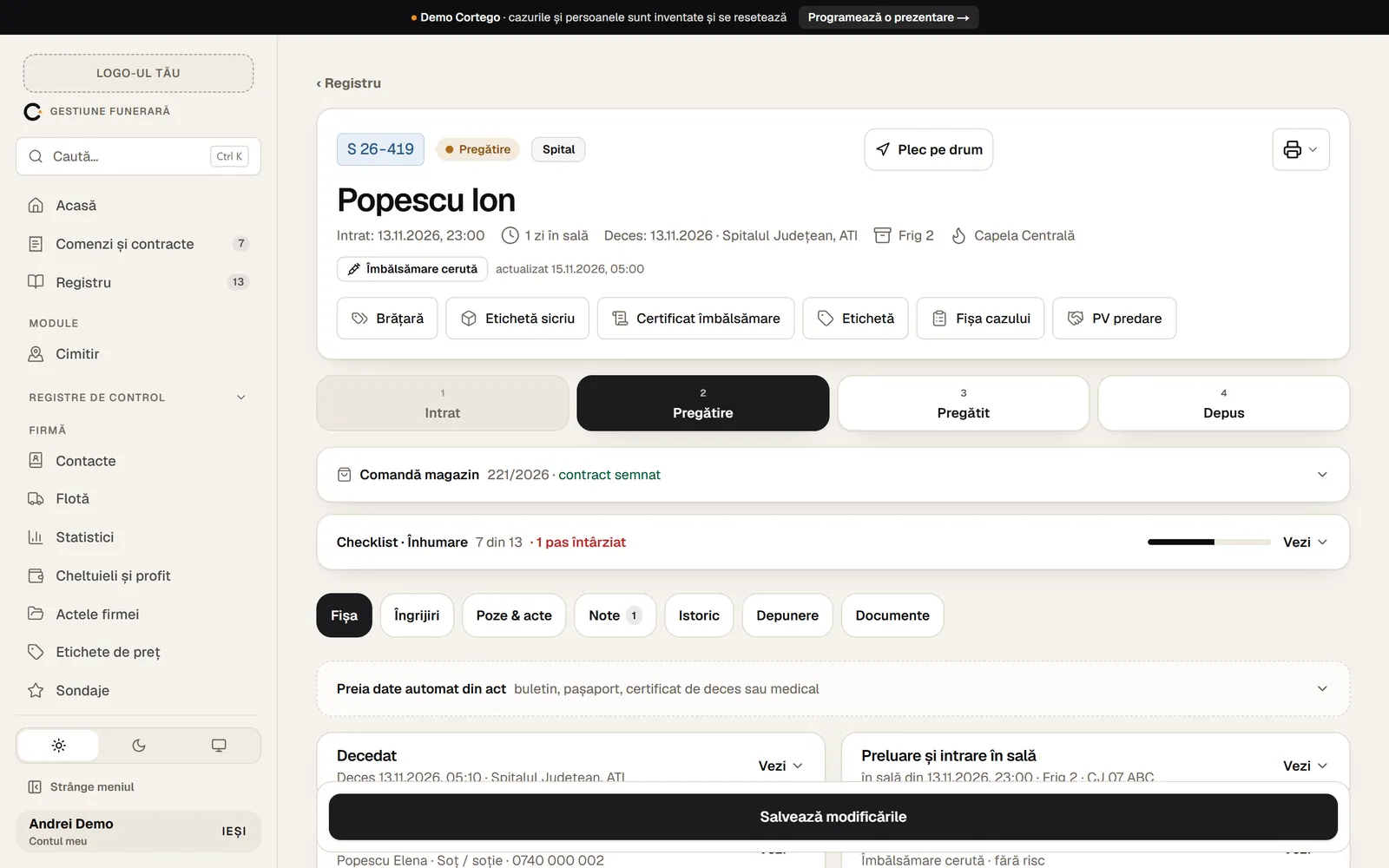
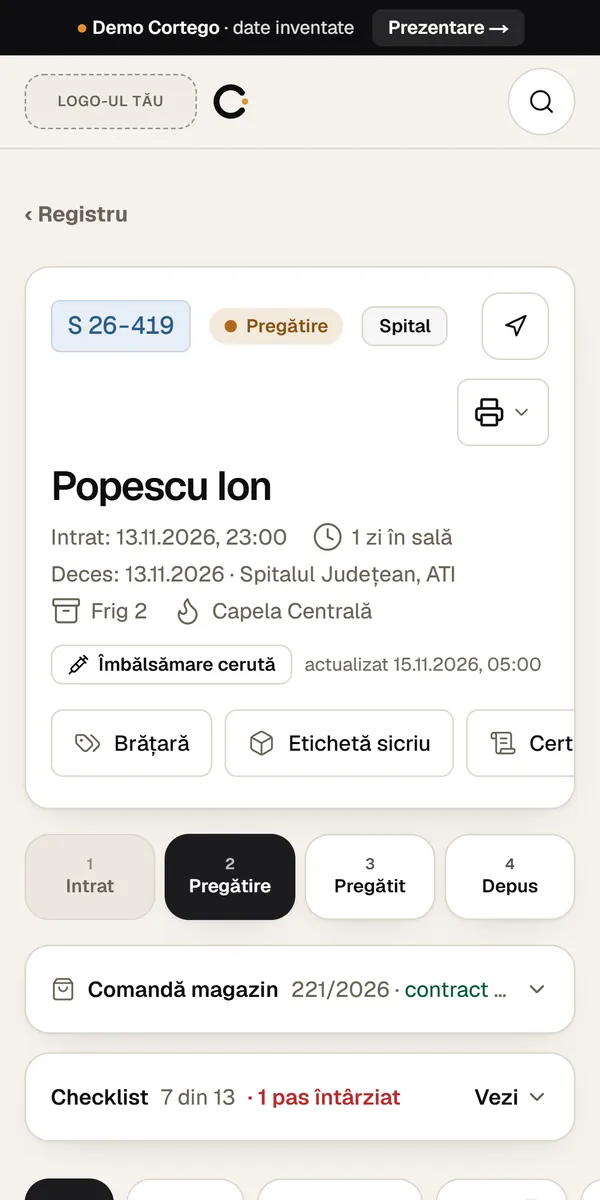
The papers for the DSP come out of the file: the family’s request, the request for approval, the transport permit. They go by email to the DSP, with the funeral home in copy. The case checklist ticks itself off from what is done in the app: the contract, the embalming, the chapel.
The order is filled in from the file, with nothing typed twice. The family signs the contract on the tablet in the shop, on the agent’s screen or through a link on their phone, and payment also comes through a link, straight into the funeral home’s account.
At the end, again from the order, come the printed obituary, the image for Facebook and the online memorial, made only with the family’s consent, where relatives light a candle and leave a message. Nothing appears in public without the funeral home’s approval.
The path of a case through Cortego
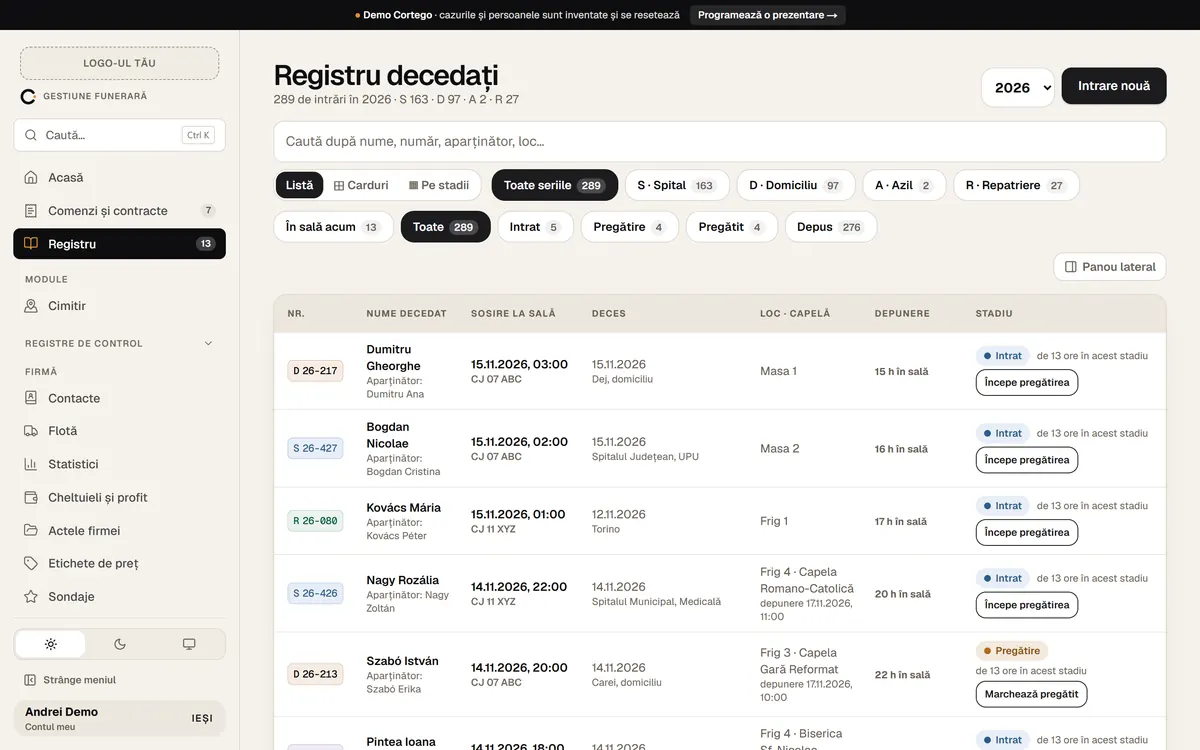 The mortuary register, by series
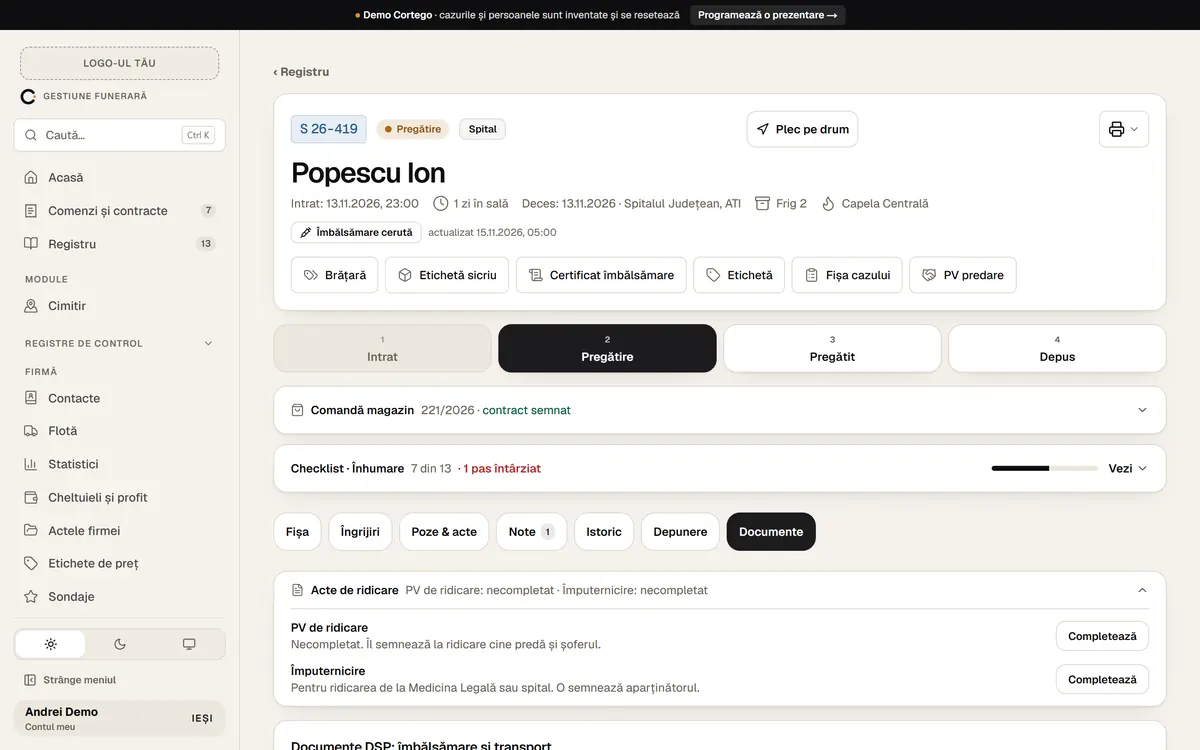 The papers for the case
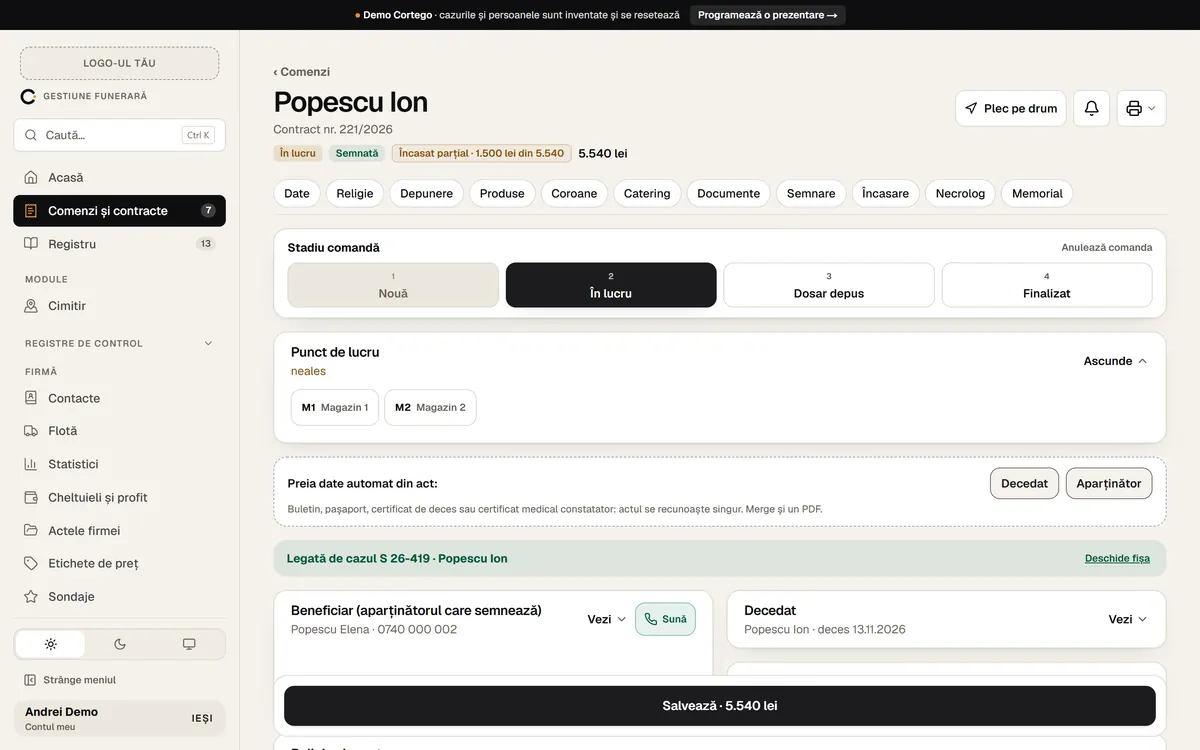 The order, filled in from the file
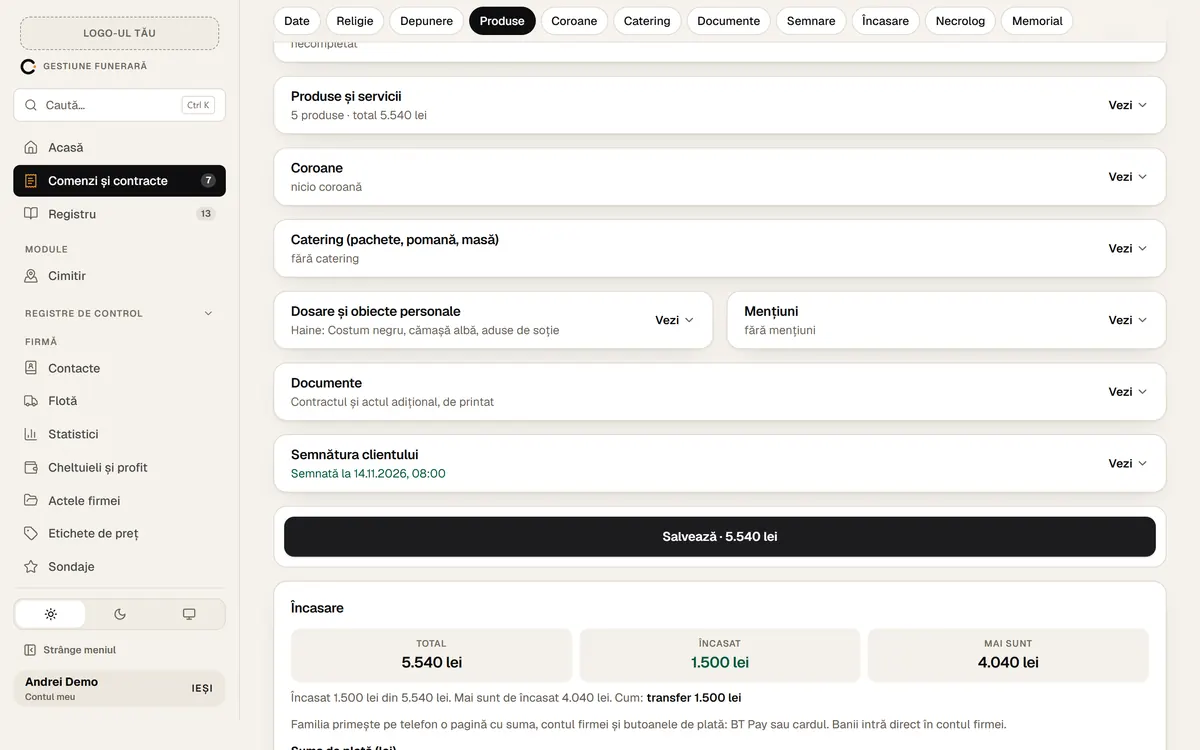 Signature and payment
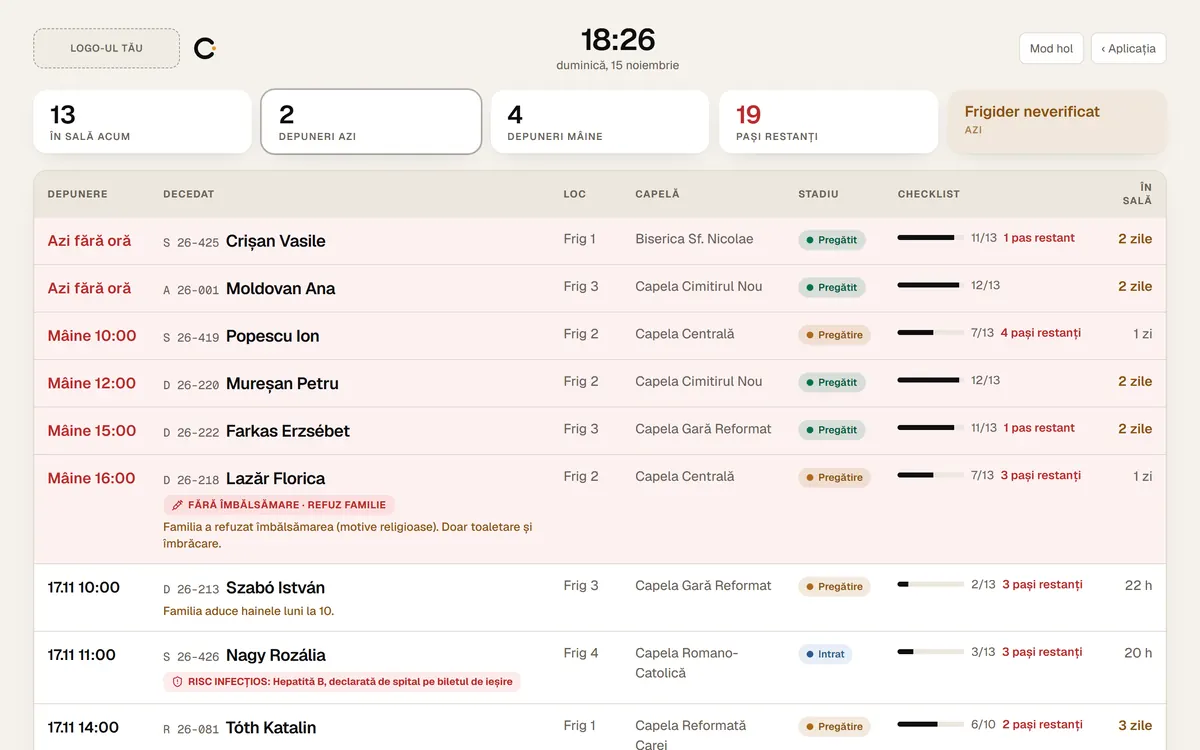 The mortuary screen, on a TV
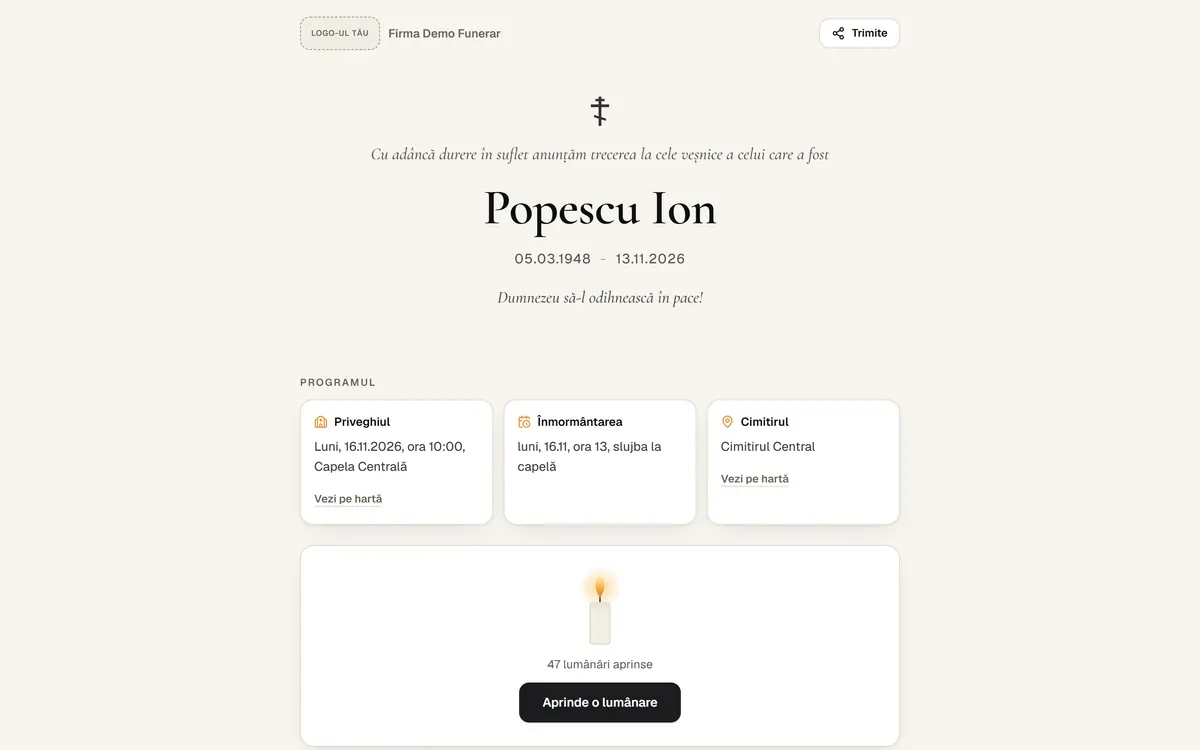 The online memorial
What Sebastian asked for after the first week
Cortego grows out of what the people who use it ask for. Sebastian Kirilă writes to tell us what is missing and we put it into the app, sometimes the same day: the batch of 14 November went out in the evening, at around 21:40.
That is how the fleet module came about (the firm’s vehicles on a map, with their roadworthiness test, insurance and servicing), along with expenses and profit by month and by case, sales statistics, the link to the phone switchboard and the inspection registers.
The modules Kirilă Funerar asked for
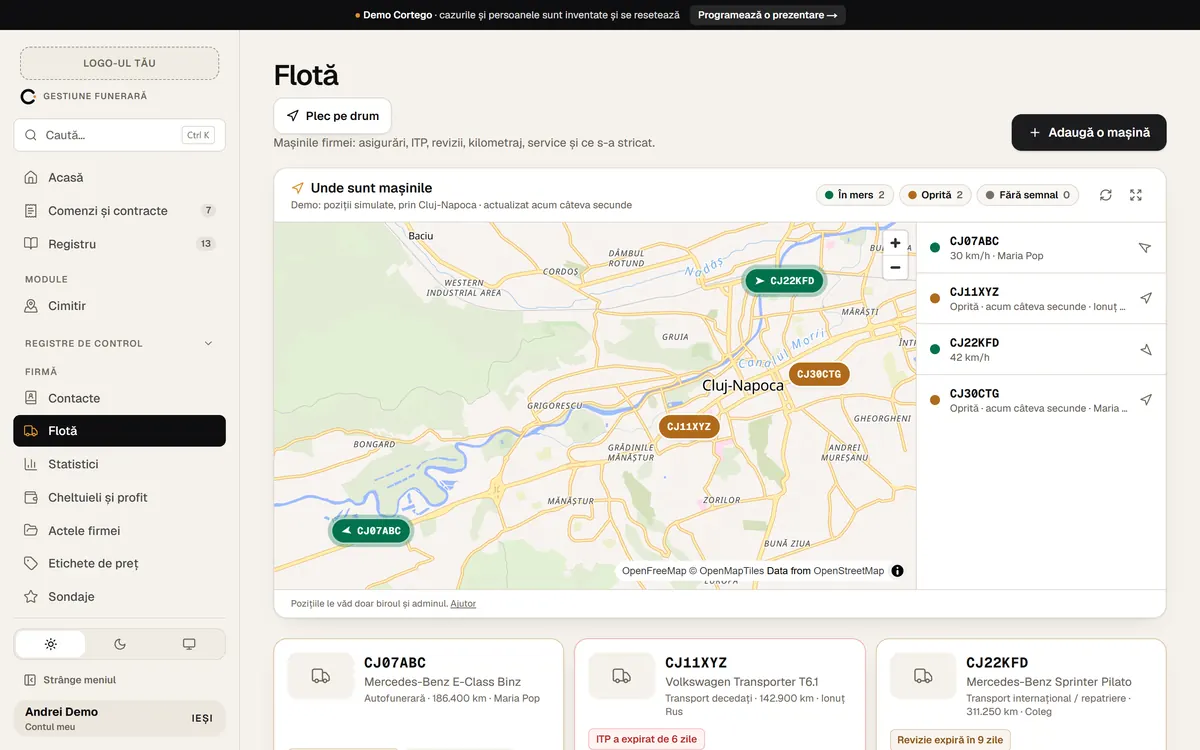 The fleet, on a map
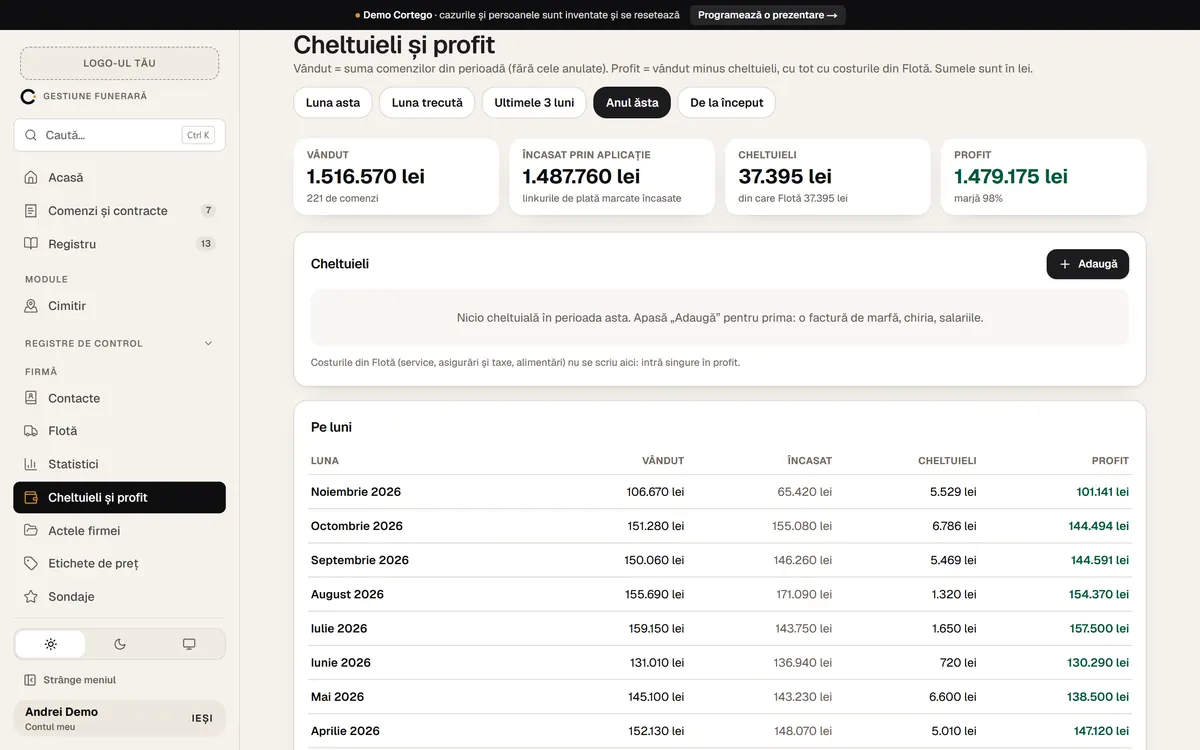 Expenses and profit
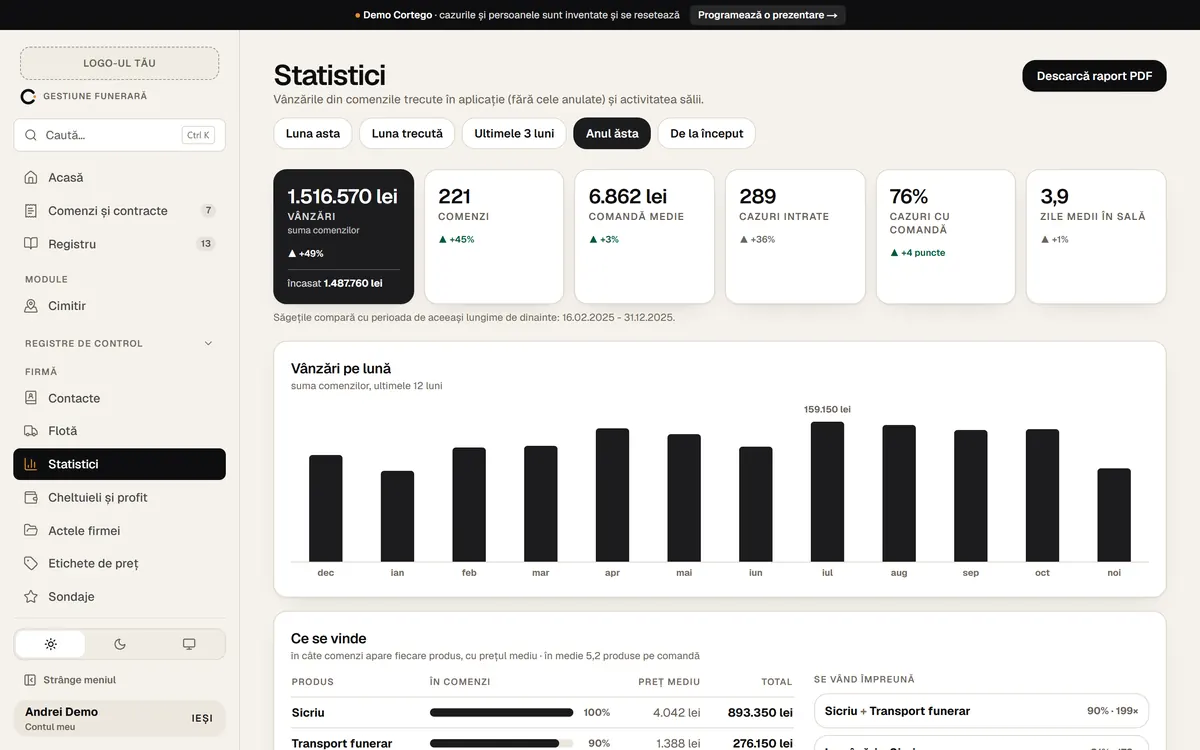 Sales statistics
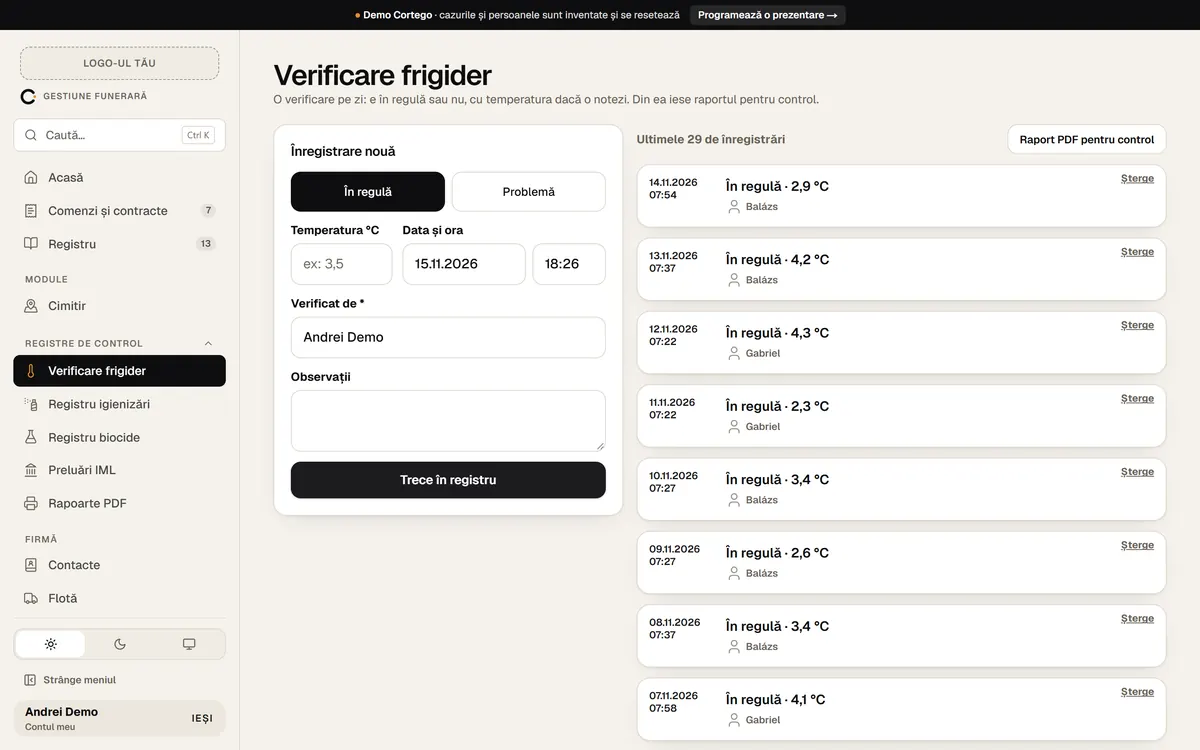 The refrigerator check
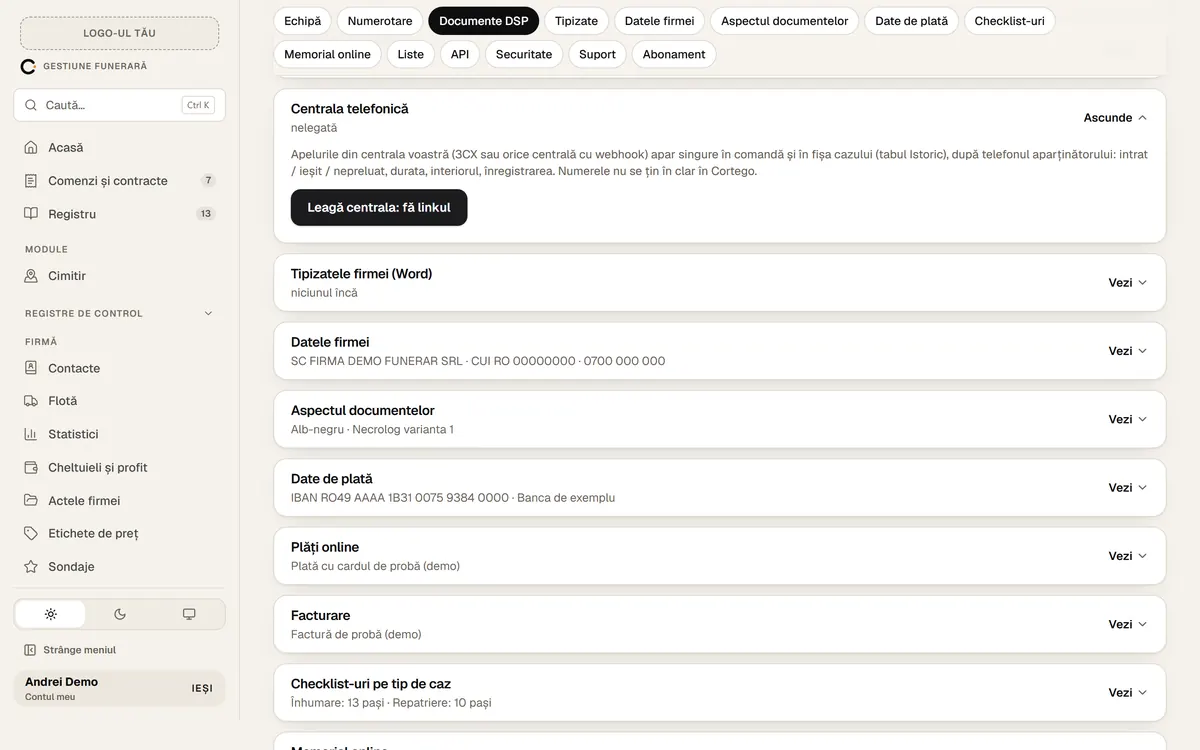 The link to the phone switchboard
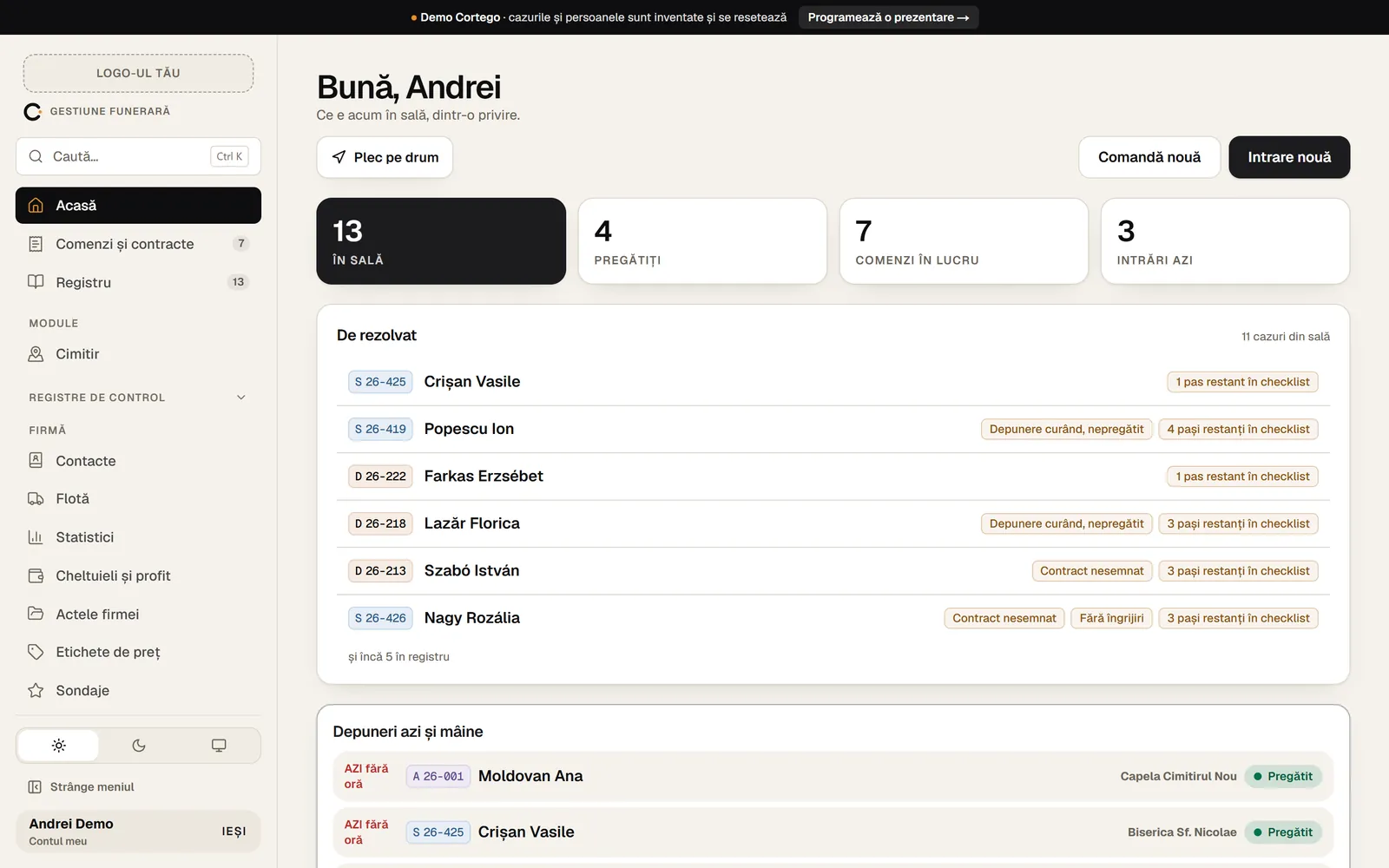 Home: what is in the mortuary now
- Fleet: where the vehicles are now, who is on the way to which case, which deadlines are about to run out.
- Expenses and profit: sold, collected, spent and the margin, for the funeral home’s admin only.
Read more
- Phone switchboard: calls appear by themselves in the case file and on the order, matched by the next of kin’s phone number.
- Inspection registers: the refrigerator, cleaning, biocides and handovers to the forensic institute, with a PDF report for the inspection.
- Invoicing through SmartBill, Oblio or SAGA, from the order.
Each funeral home sees only its own data
One app works for several funeral homes, each at its own address. The separation is made in the database itself: one firm cannot see another’s data, and inside a firm each role (driver, mortuary, agent, office) sees only what it needs.
Read more
Data that identifies people is kept encrypted with the funeral home’s key and opens only on devices the firm has approved. Everything is hosted in the European Union. We finished both before a second funeral home came into the app.
Where Cortego got to in two weeks
Cortego is two weeks old. The figures below show how much the app has grown in that time and what it already does, day in, day out, at Kirilă Funerar.
- 13 daysfrom mortuary register to softwareThe Kirilă register started on 2 November 2026; since 15 November, a second funeral home uses Cortego too.
- 65changes requested by SebastianOut of 305 released between 4 and 15 November. Some reached the app the same evening.
- Oncethe name and ID number are typedIn the case file. The DSP papers, the contract, the obituary and the memorial are filled in from it.
- 13 / 10checklist steps: burial / repatriationThey tick themselves off from what is done in the app: the contract, the embalming, the chapel.
- 42county health authorities in the address bookWith their official details. The papers go by email to the DSP, with the funeral home in copy.
- 0 leiof the payments pass through CortegoThe family pays through a link, straight into the funeral home’s account: bank transfer, BT Pay or card.
Code history: 2 – 15 November 2026 · the screens: the public demo at demo.cortego.ro, 15 November 2026
How we measured
Read more
- The screens
- They are from the public demo at demo.cortego.ro, on 15 November 2026. The demo has its own firm, cases and amounts and resets every night. The data of the funeral homes that use Cortego appears nowhere on this page.
- The changes
- Counted in the Cortego code history, on the production branch, between 4 and 15 November 2026. “Requested by Sebastian” are the ones that mention Sebastian Kirilă in their description.
- What we will measure next
- How much time a funeral home saves each month and how many paperwork mistakes no longer happen. We will count them after the first months of work at Kirilă Funerar and at Beligi Funerare.
What we learned
- Software for an industry gets built next to the people who work in it: the order of the screens in Cortego is the order in which a case is worked in the mortuary at Kirilă.
Read more
- With data this sensitive, encryption and EU hosting come before new features: we finished them before the second funeral home.
- A public demo, with its own firm and its own cases, lets us show a whole case, from arrival to memorial, in 15 minutes, without touching anyone’s data.
Who worked on it
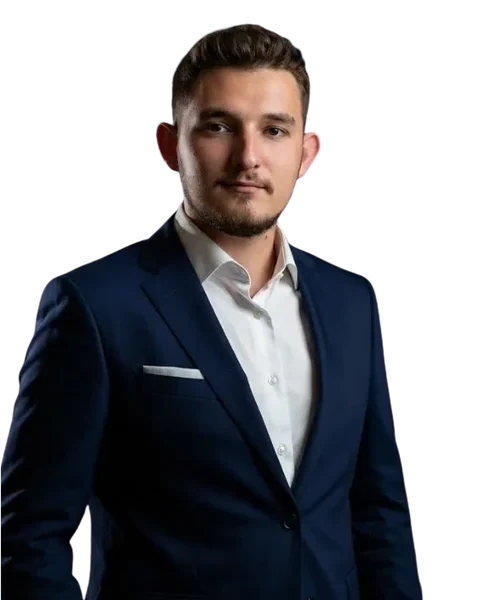
Questions
What is Cortego?
Software for funeral homes in Romania: the mortuary register, the care given, the papers for the public health authority, orders and contracts signed on a tablet, payment by link, the obituary and the online memorial, the fleet, expenses and profit.
Who built it?
nextry, together with Kirilă Funerar in Satu Mare, where the app is used every day. The order of the screens follows the way a case is worked in their mortuary.
Where is the data kept?
In the European Union. Data that identifies people is encrypted with the funeral home’s key and opens only on devices it has approved. One funeral home cannot see another’s data.
Does it work on a phone?
Yes, in the browser: on the office computer, on the driver’s phone and on the tablet the family signs on. It can be added to the phone’s home screen like an app.
How can I see it?
The public demo is at demo.cortego.ro: you go straight in and follow a case from arrival at the mortuary to the memorial. The details and the presentation are on cortego.ro. Both are in Romanian.